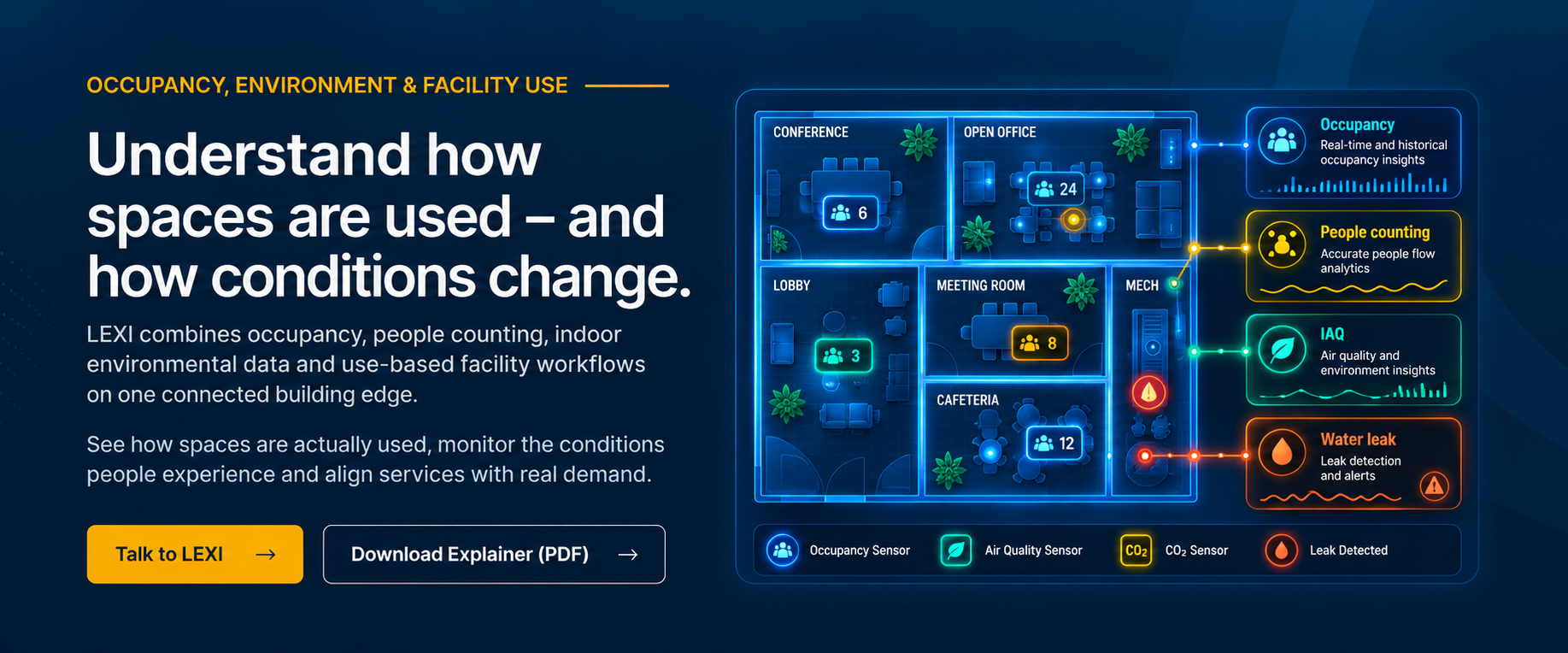
Occupancy, environment & facility use — understand how spaces are used and how conditions change. LEXI combines occupancy, people counting, indoor environmental data and use-based facility workflows on one connected building edge. See how spaces are actually used, monitor the conditions people experience and align services with real demand. A live building floor plan shows real-time occupancy across conference, open office, lobby, meeting room and cafeteria spaces, with occupancy, people-counting, IAQ and water-leak insights from occupancy, air-quality, CO2 and leak sensors.
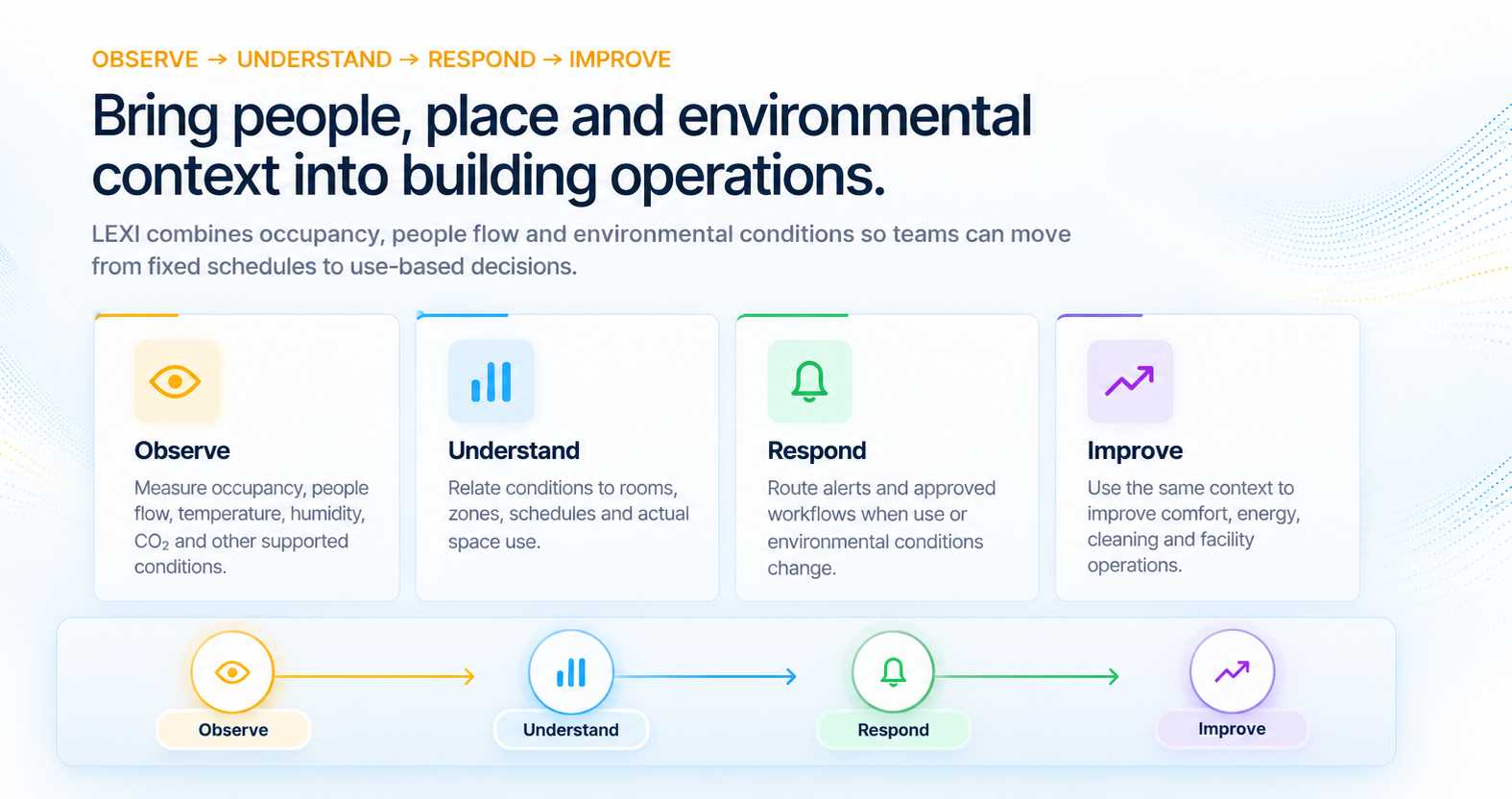
Observe, understand, respond, improve — bring people, place and environmental context into building operations. LEXI combines occupancy, people flow and environmental conditions so teams can move from fixed schedules to use-based decisions. Observe: measure occupancy, people flow, temperature, humidity, CO2 and other supported conditions. Understand: relate conditions to rooms, zones, schedules and actual space use. Respond: route alerts and approved workflows when use or environmental conditions change. Improve: use the same context to improve comfort, energy, cleaning and facility operations.
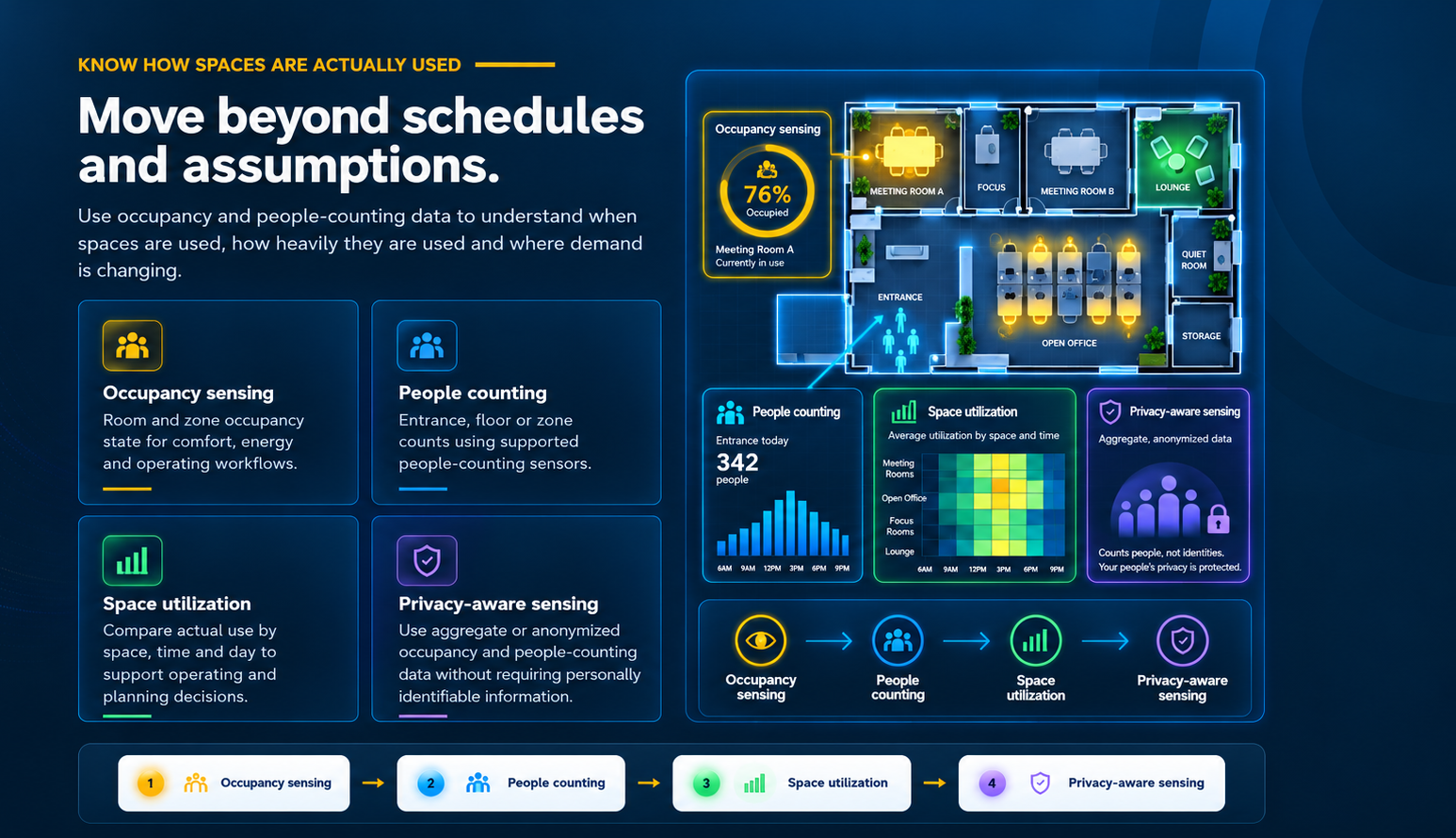
Know how spaces are actually used — move beyond schedules and assumptions. Use occupancy and people-counting data to understand when spaces are used, how heavily they are used and where demand is changing. Occupancy sensing: room and zone occupancy state for comfort, energy and operating workflows. People counting: entrance, floor or zone counts using supported people-counting sensors. Space utilization: compare actual use by space, time and day to support operating and planning decisions. Privacy-aware sensing: use aggregate or anonymized occupancy and people-counting data without requiring personally identifiable information.
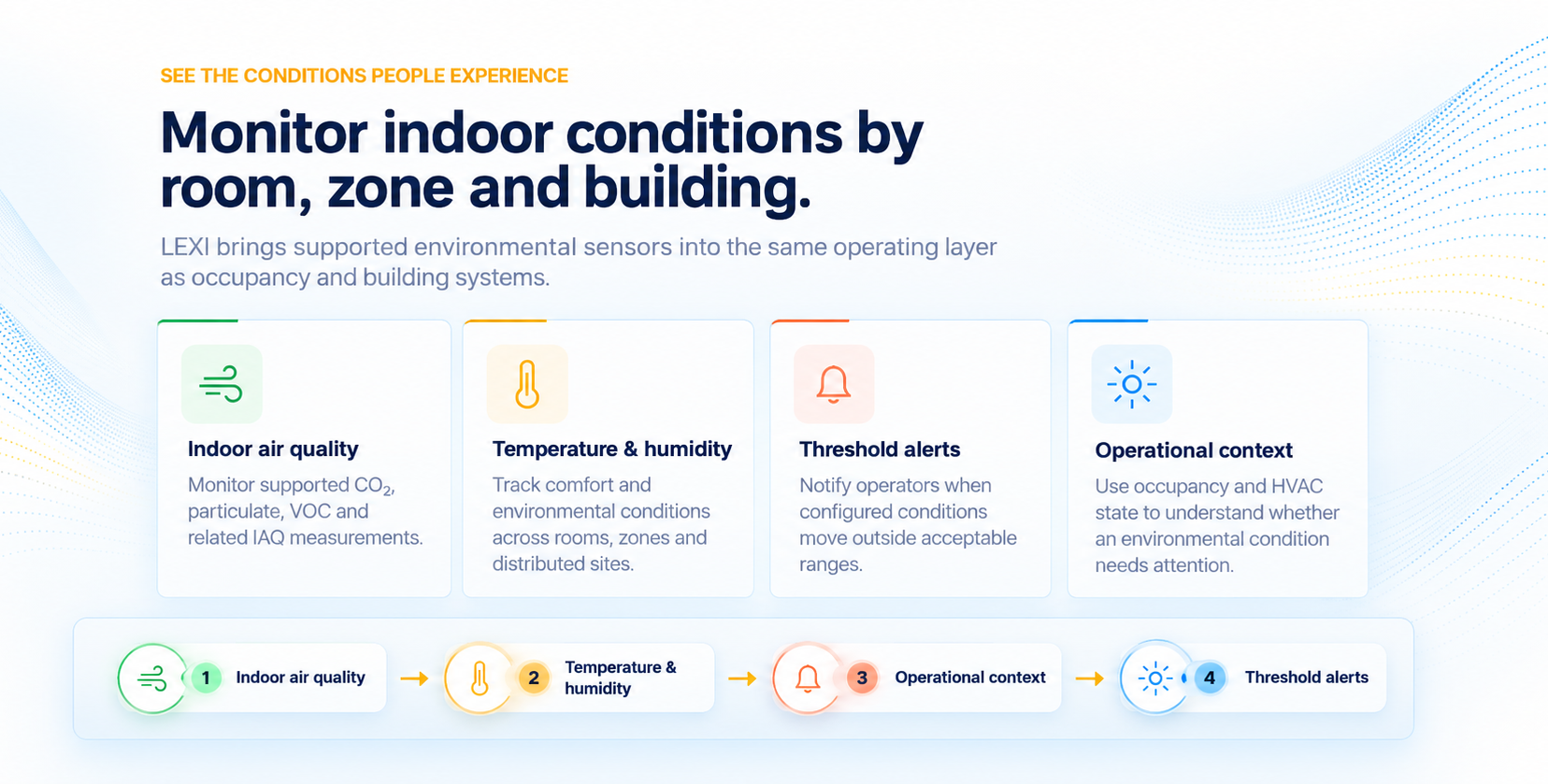
See the conditions people experience — monitor indoor conditions by room, zone and building. LEXI brings supported environmental sensors into the same operating layer as occupancy and building systems. Indoor air quality: monitor supported CO2, particulate, VOC and related IAQ measurements. Temperature & humidity: track comfort and environmental conditions across rooms, zones and distributed sites. Threshold alerts: notify operators when configured conditions move outside acceptable ranges. Operational context: use occupancy and HVAC state to understand whether an environmental condition needs attention.
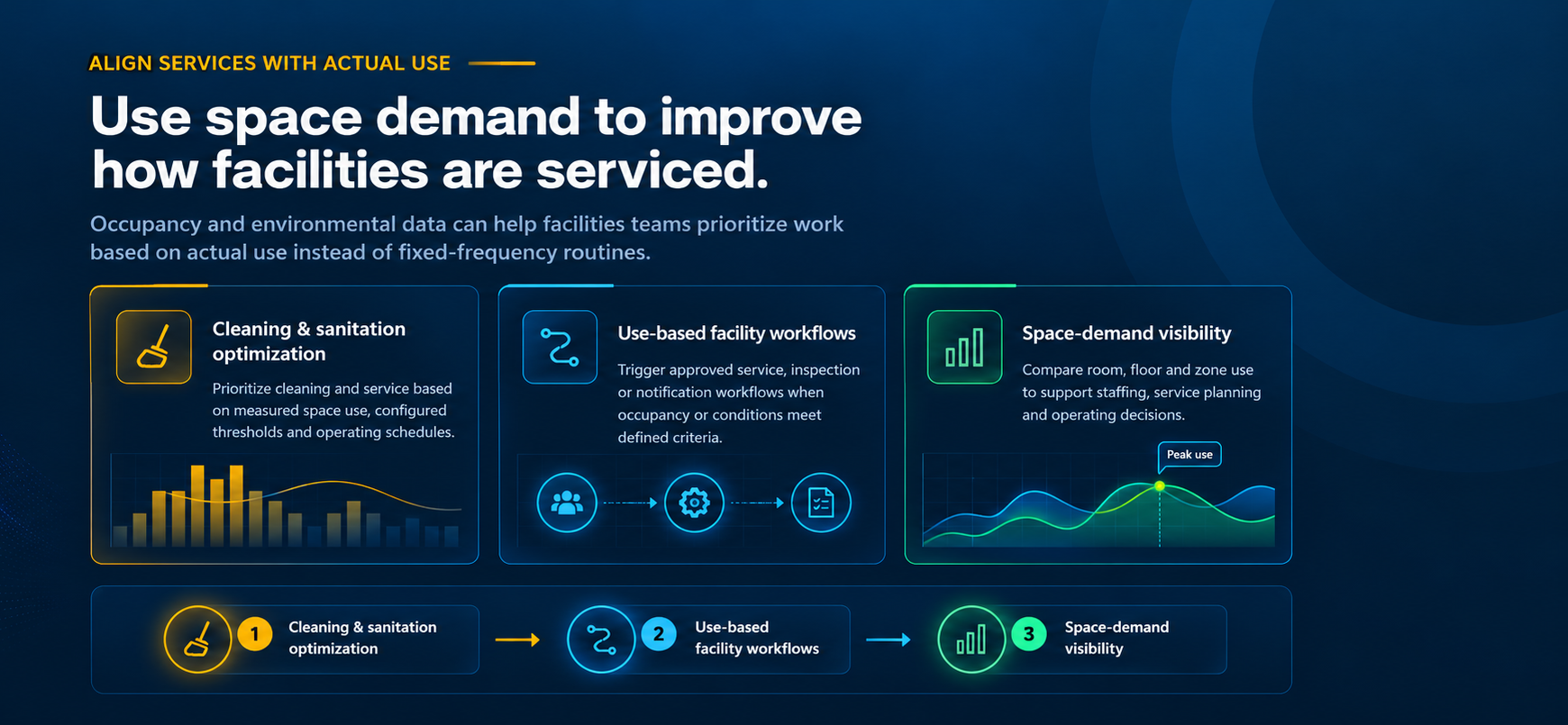
Align services with actual use — use space demand to improve how facilities are serviced. Occupancy and environmental data can help facilities teams prioritize work based on actual use instead of fixed-frequency routines. Cleaning & sanitation optimization: prioritize cleaning and service based on measured space use, configured thresholds and operating schedules. Use-based facility workflows: trigger approved service, inspection or notification workflows when occupancy or conditions meet defined criteria. Space-demand visibility: compare room, floor and zone use to support staffing, service planning and operating decisions.
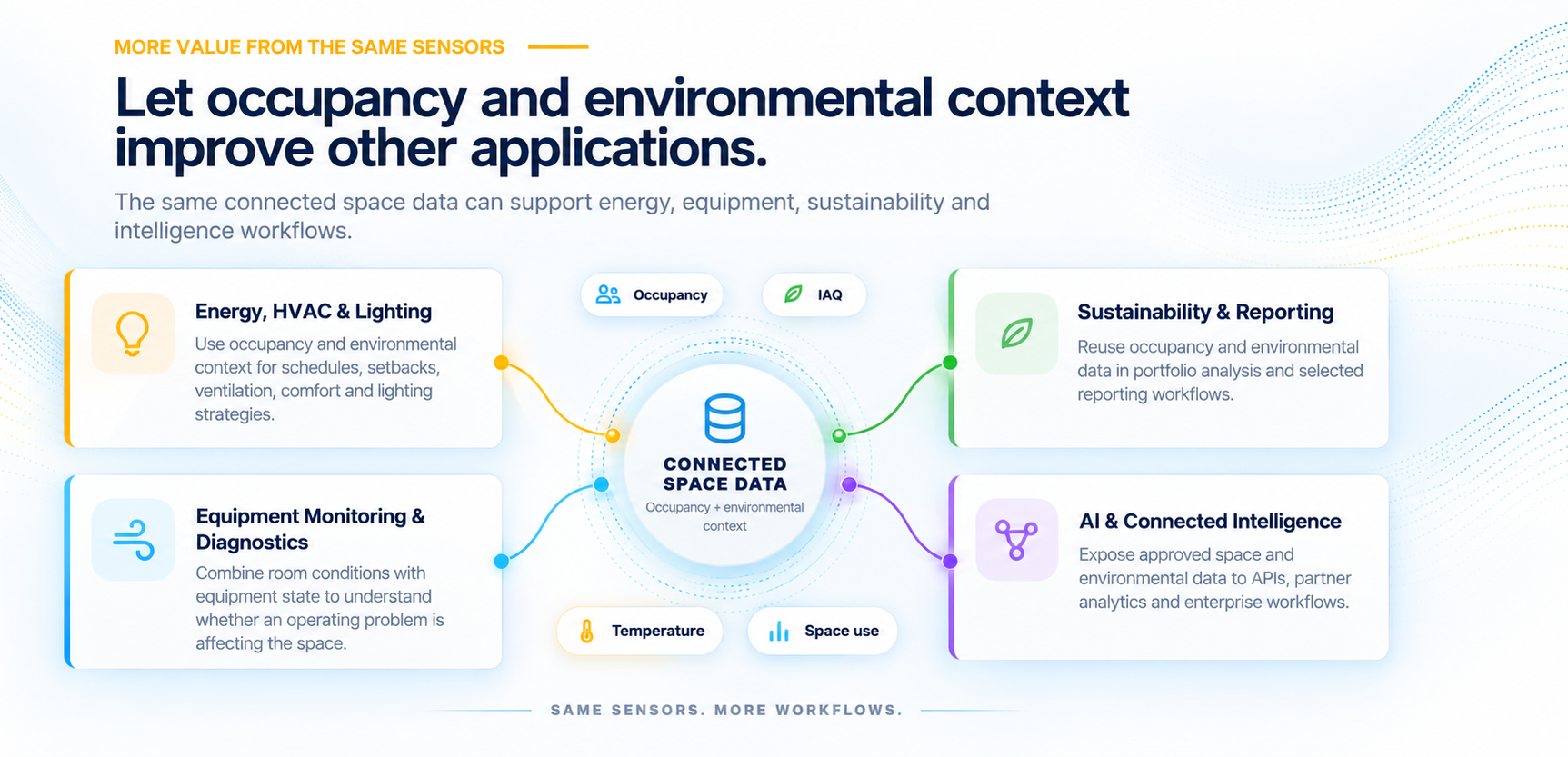
More value from the same sensors — let occupancy and environmental context improve other applications. The same connected space data (occupancy plus environmental context) can support energy, equipment, sustainability and intelligence workflows. Energy, HVAC & Lighting: use occupancy and environmental context for schedules, setbacks, ventilation, comfort and lighting strategies. Equipment Monitoring & Diagnostics: combine room conditions with equipment state to understand whether an operating problem is affecting the space. Sustainability & Reporting: reuse occupancy and environmental data in portfolio analysis and selected reporting workflows. AI & Connected Intelligence: expose approved space and environmental data to APIs, partner analytics and enterprise workflows. Same sensors, more workflows.
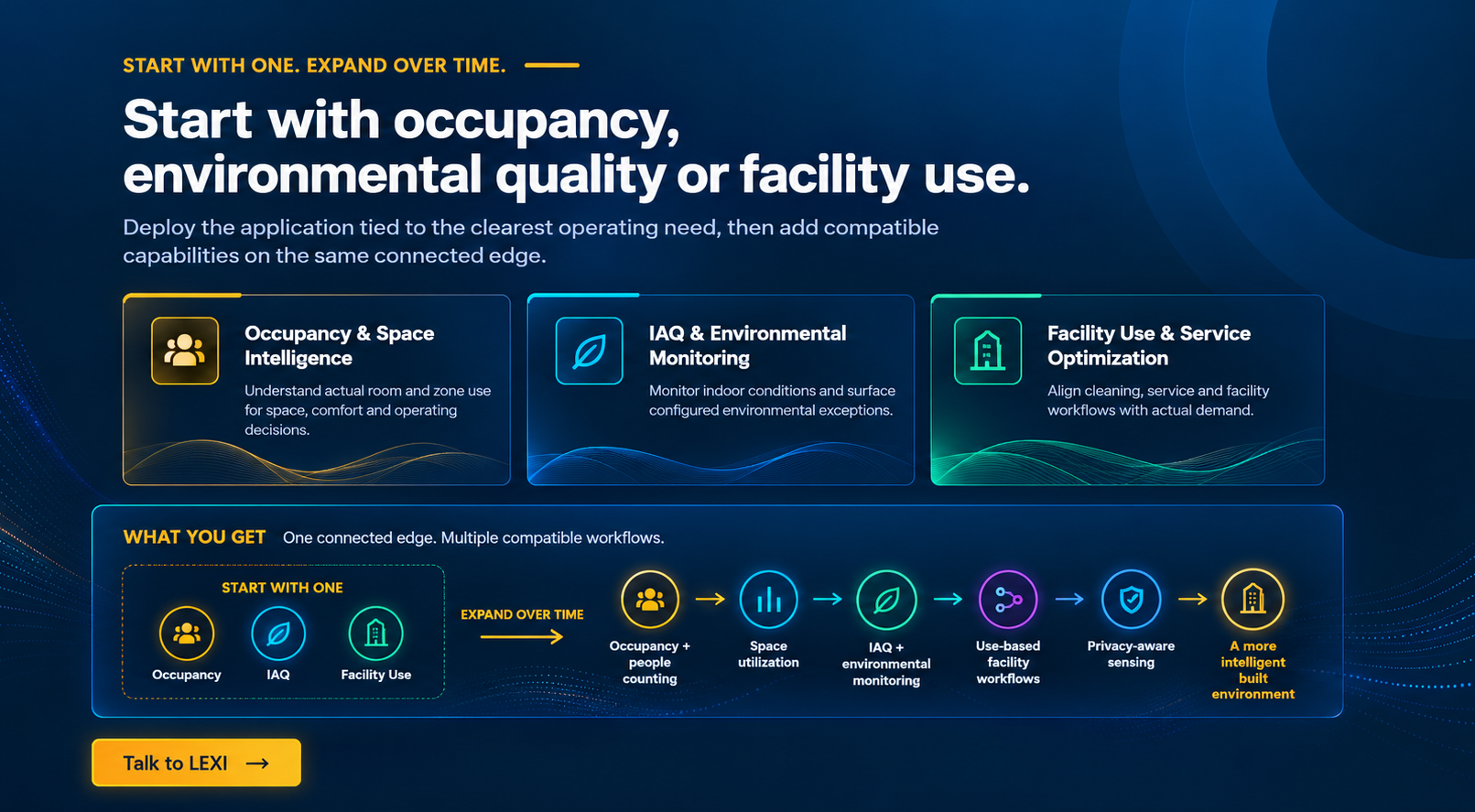
Start with one, expand over time — start with occupancy, environmental quality or facility use. Deploy the application tied to the clearest operating need, then add compatible capabilities on the same connected edge. Occupancy & Space Intelligence: understand actual room and zone use for space, comfort and operating decisions. IAQ & Environmental Monitoring: monitor indoor conditions and surface configured environmental exceptions. Facility Use & Service Optimization: align cleaning, service and facility workflows with actual demand. What you get: one connected edge and multiple compatible workflows. Start with occupancy, IAQ or facility use, then expand over time through occupancy plus people counting, space utilization, IAQ plus environmental monitoring, use-based facility workflows and privacy-aware sensing toward a more intelligent built environment.