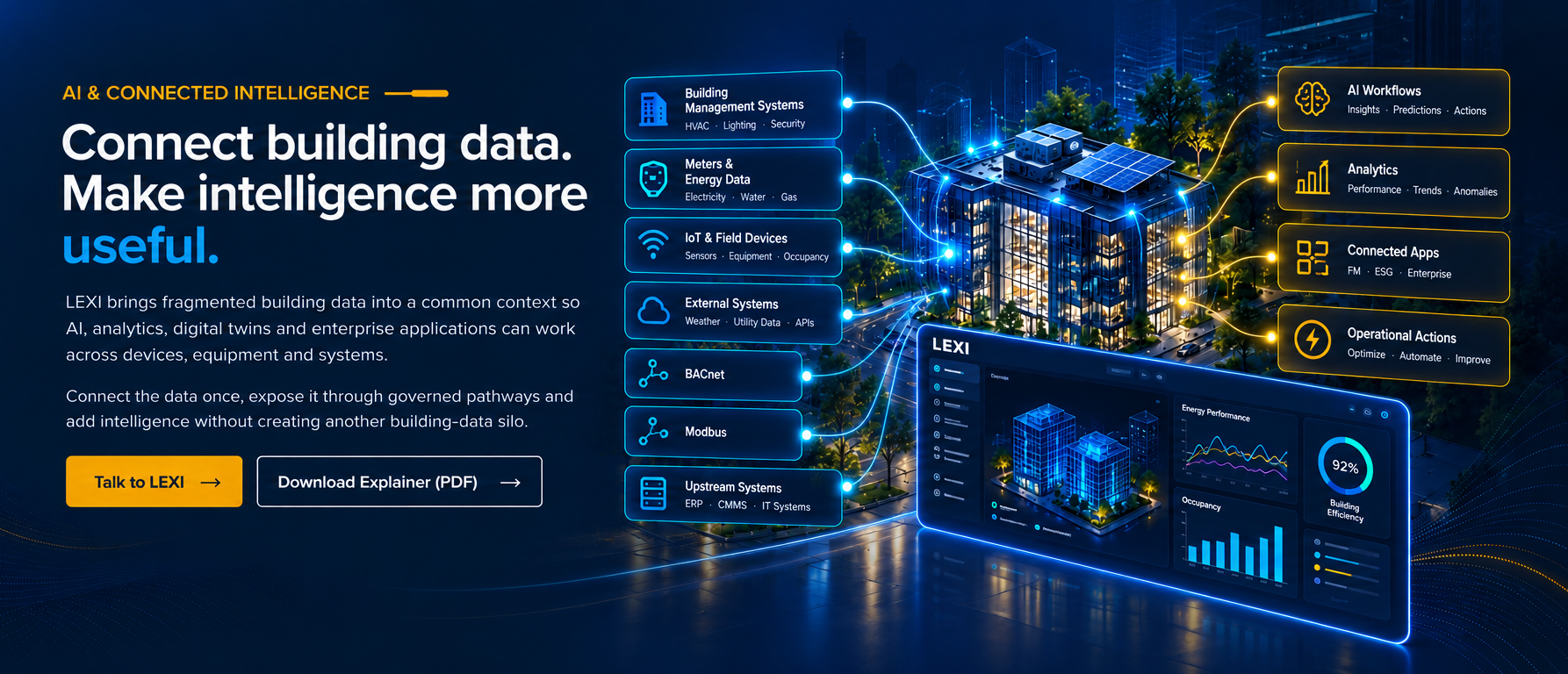
AI & connected intelligence — connect building data, make intelligence more useful. LEXI brings fragmented building data into a common context so AI, analytics, digital twins and enterprise applications can work across devices, equipment and systems. Connect the data once, expose it through governed pathways and add intelligence without creating another building-data silo. Building management systems, meters and energy data, IoT and field devices, external systems, BACnet, Modbus and upstream systems connect through LEXI into AI workflows, analytics, connected apps and operational actions.
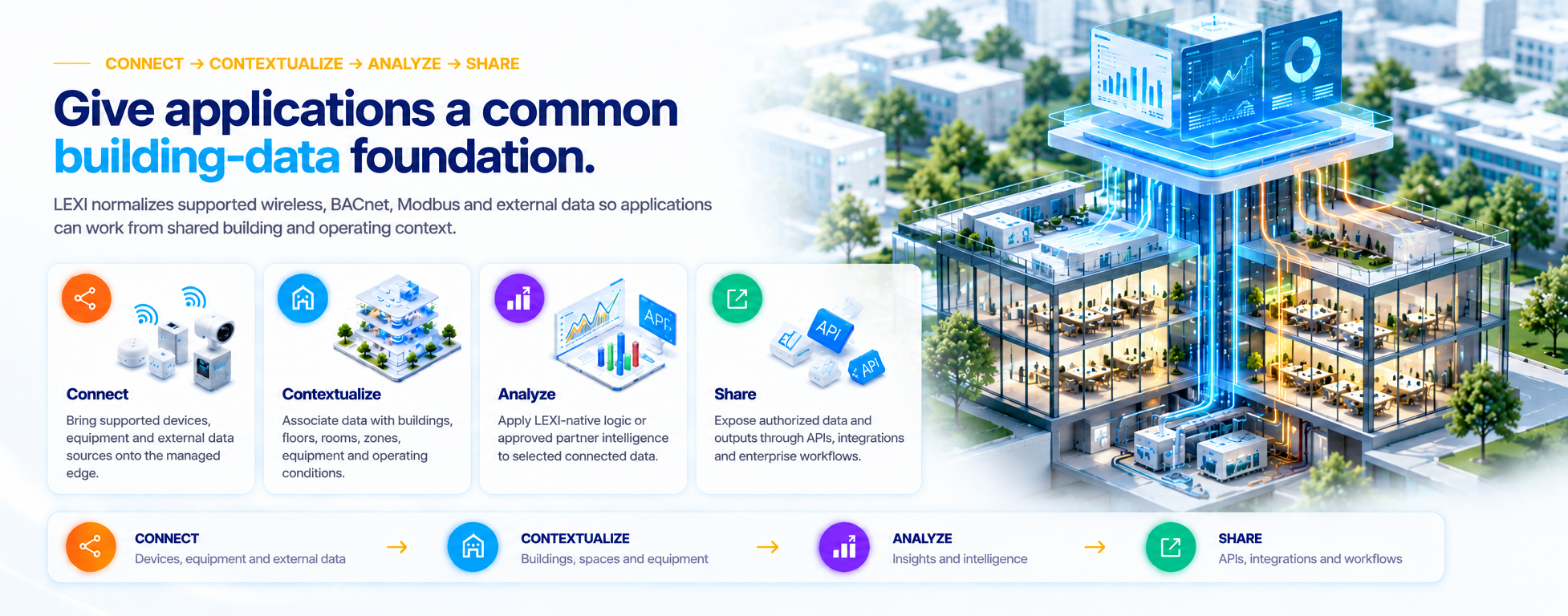
Connect, contextualize, analyze, share — give applications a common building-data foundation. LEXI normalizes supported wireless, BACnet, Modbus and external data so applications can work from shared building and operating context. Connect: bring supported devices, equipment and external data sources onto the managed edge. Contextualize: associate data with buildings, floors, rooms, zones, equipment and operating conditions. Analyze: apply LEXI-native logic or approved partner intelligence to selected connected data. Share: expose authorized data and outputs through APIs, integrations and enterprise workflows.
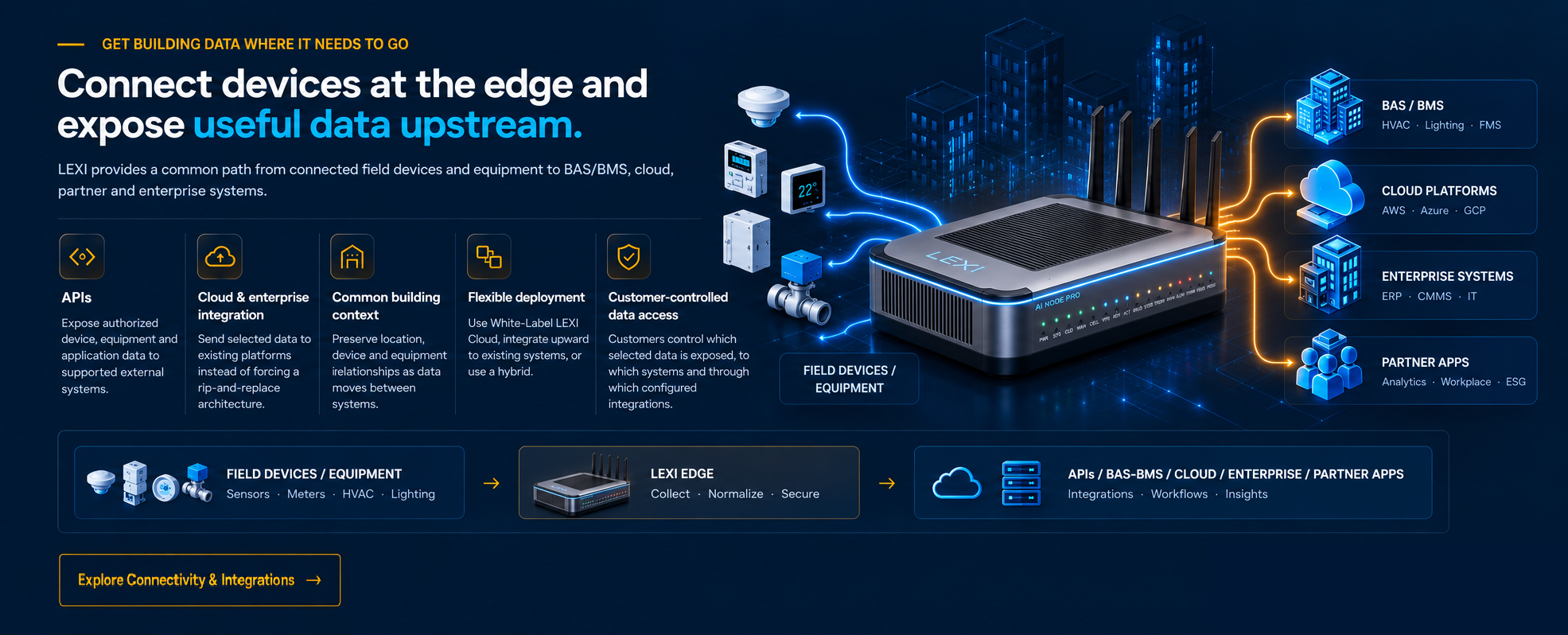
Get building data where it needs to go — connect devices at the edge and expose useful data upstream. LEXI provides a common path from connected field devices and equipment to BAS/BMS, cloud, partner and enterprise systems. APIs: expose authorized device, equipment and application data to supported external systems. Cloud & enterprise integration: send selected data to existing platforms instead of forcing a rip-and-replace architecture. Common building context: preserve location, device and equipment relationships as data moves between systems. Flexible deployment: use White-Label LEXI Cloud, integrate upward to existing systems, or use a hybrid. Customer-controlled data access: customers control which selected data is exposed, to which systems and through which configured integrations. Flow: field devices and equipment to the LEXI edge (collect, normalize, secure) to APIs, BAS/BMS, cloud, enterprise and partner apps.
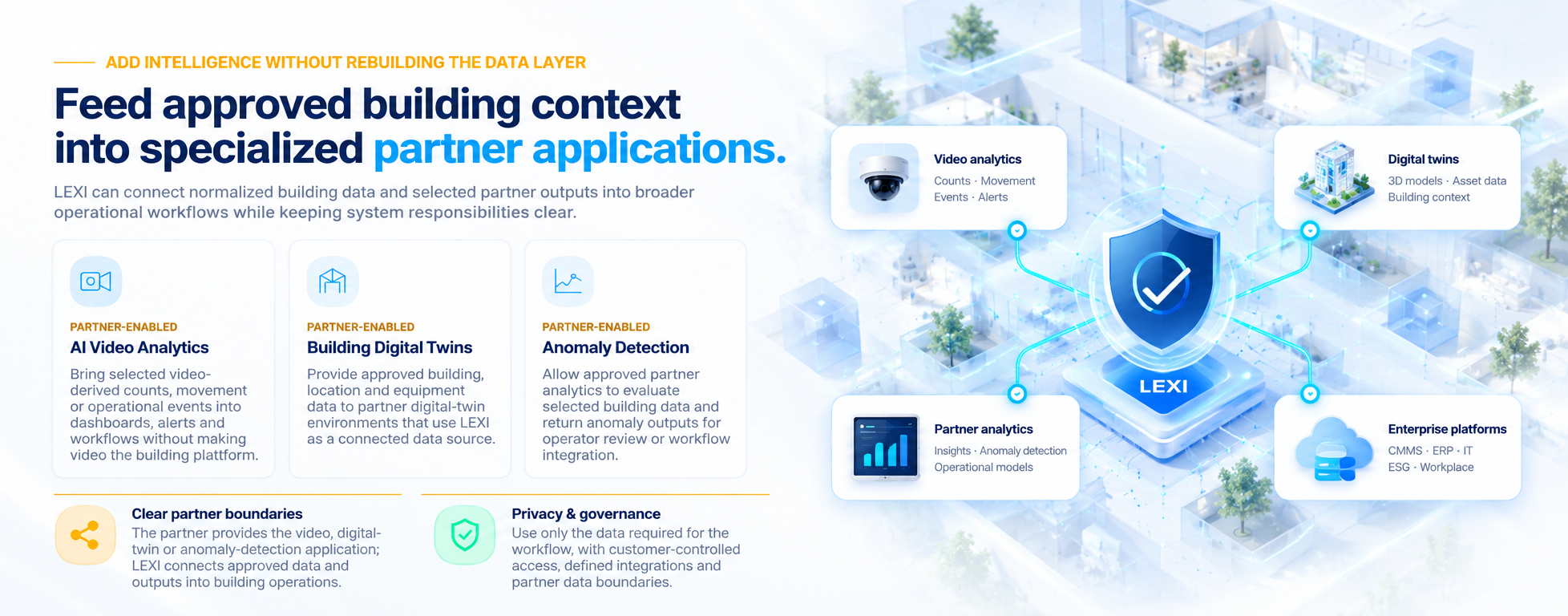
Add intelligence without rebuilding the data layer — feed approved building context into specialized partner applications. LEXI can connect normalized building data and selected partner outputs into broader operational workflows while keeping system responsibilities clear. AI Video Analytics (partner-enabled): bring selected video-derived counts, movement or operational events into dashboards, alerts and workflows without making video the building platform. Building Digital Twins (partner-enabled): provide approved building, location and equipment data to partner digital-twin environments that use LEXI as a connected data source. Anomaly Detection (partner-enabled): allow approved partner analytics to evaluate selected building data and return anomaly outputs for operator review or workflow integration. Clear partner boundaries: the partner provides the video, digital-twin or anomaly-detection application; LEXI connects approved data and outputs into building operations. Privacy & governance: use only the data required for the workflow, with customer-controlled access, defined integrations and partner data boundaries.
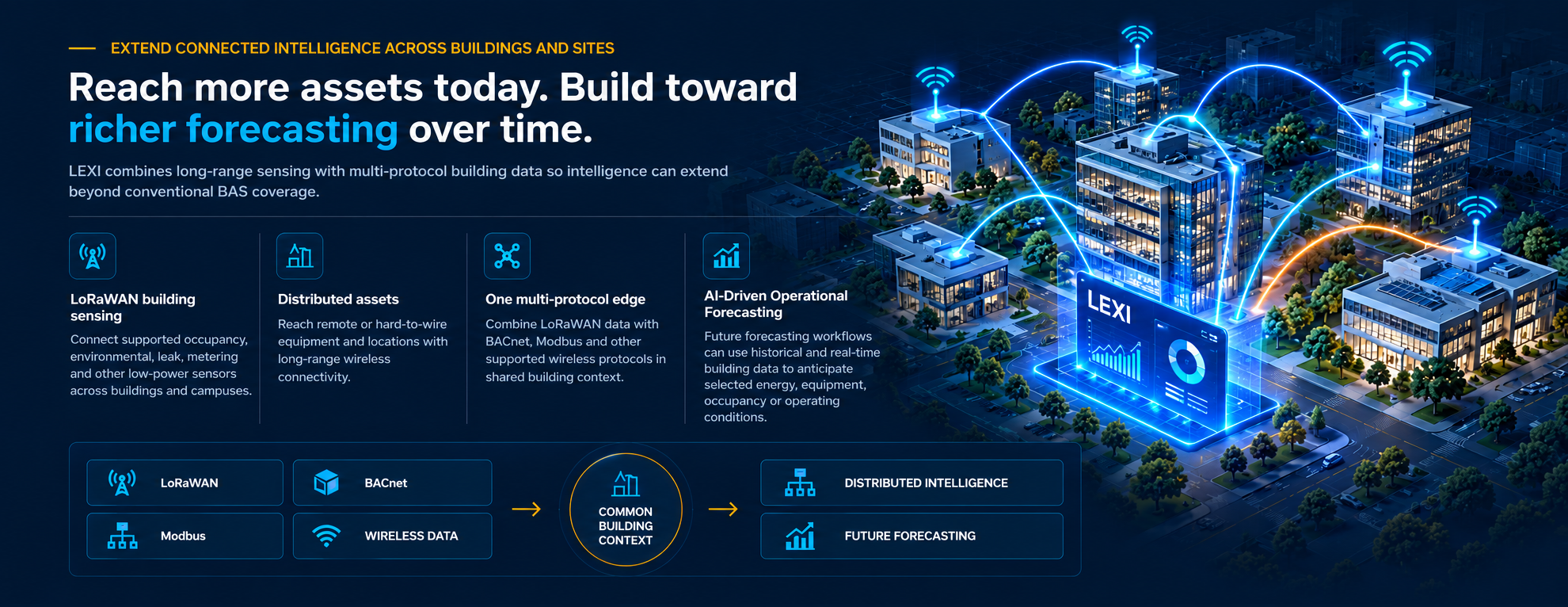
Extend connected intelligence across buildings and sites — reach more assets today, build toward richer forecasting over time. LEXI combines long-range sensing with multi-protocol building data so intelligence can extend beyond conventional BAS coverage. LoRaWAN building sensing: connect supported occupancy, environmental, leak, metering and other low-power sensors across buildings and campuses. Distributed assets: reach remote or hard-to-wire equipment and locations with long-range wireless connectivity. One multi-protocol edge: combine LoRaWAN data with BACnet, Modbus and other supported wireless protocols in shared building context. AI-Driven Operational Forecasting (roadmap): future forecasting workflows can use historical and real-time building data to anticipate selected energy, equipment, occupancy or operating conditions. Flow: LoRaWAN, BACnet, Modbus and wireless data to common building context to distributed intelligence and future forecasting.
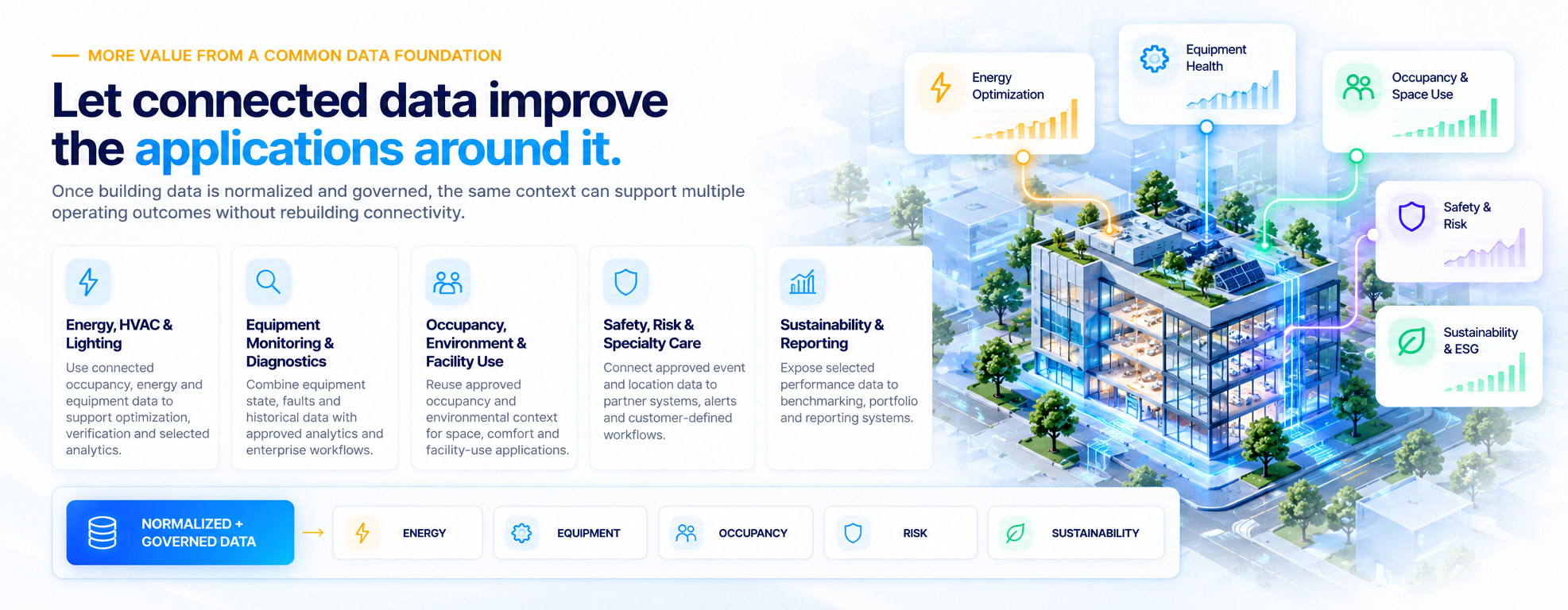
More value from a common data foundation — let connected data improve the applications around it. Once building data is normalized and governed, the same context can support multiple operating outcomes without rebuilding connectivity. Energy, HVAC & Lighting: use connected occupancy, energy and equipment data to support optimization, verification and selected analytics. Equipment Monitoring & Diagnostics: combine equipment state, faults and historical data with approved analytics and enterprise workflows. Occupancy, Environment & Facility Use: reuse approved occupancy and environmental context for space, comfort and facility-use applications. Safety, Risk & Specialty Care: connect approved event and location data to partner systems, alerts and customer-defined workflows. Sustainability & Reporting: expose selected performance data to benchmarking, portfolio and reporting systems. Flow: normalized and governed data to energy, equipment, occupancy, risk and sustainability.
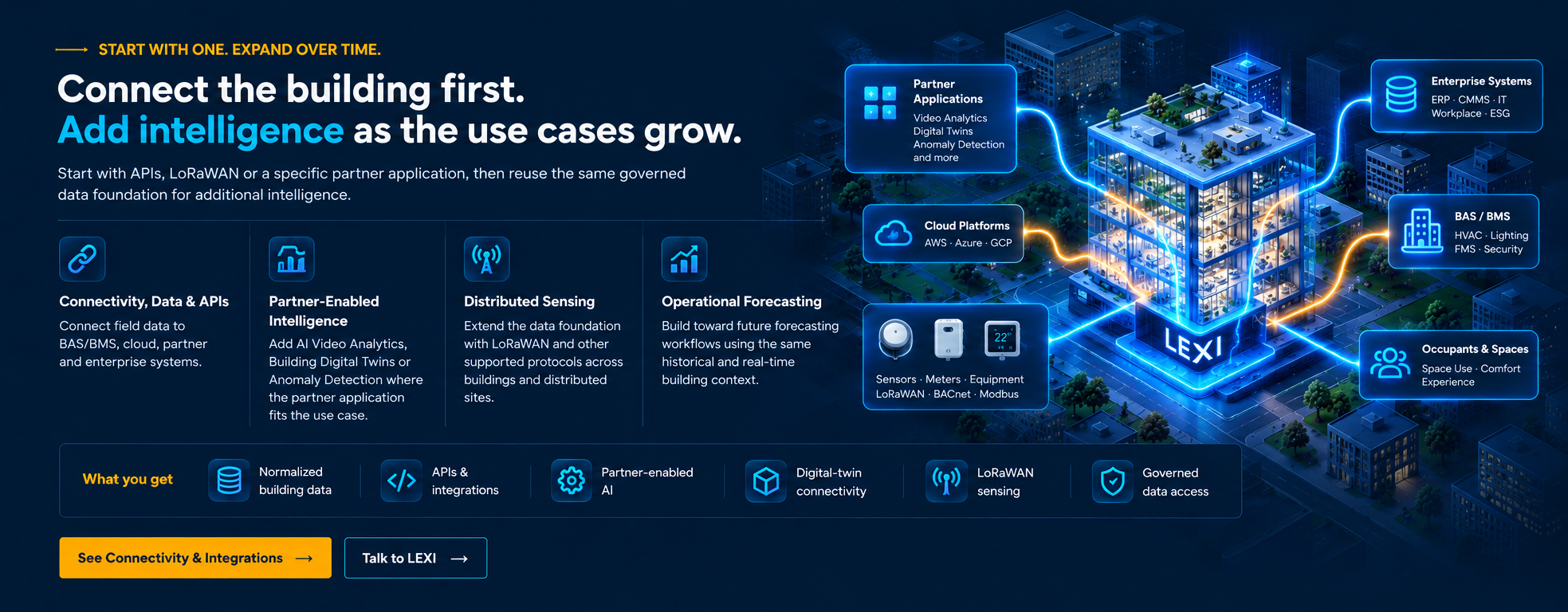
Start with one, expand over time — connect the building first, add intelligence as the use cases grow. Start with APIs, LoRaWAN or a specific partner application, then reuse the same governed data foundation for additional intelligence. Connectivity, Data & APIs: connect field data to BAS/BMS, cloud, partner and enterprise systems. Partner-Enabled Intelligence: add AI Video Analytics, Building Digital Twins or Anomaly Detection where the partner application fits the use case. Distributed Sensing: extend the data foundation with LoRaWAN and other supported protocols across buildings and distributed sites. Operational Forecasting (roadmap): build toward future forecasting workflows using the same historical and real-time building context. What you get: normalized building data, APIs & integrations, partner-enabled AI, digital-twin connectivity, LoRaWAN sensing and governed data access.