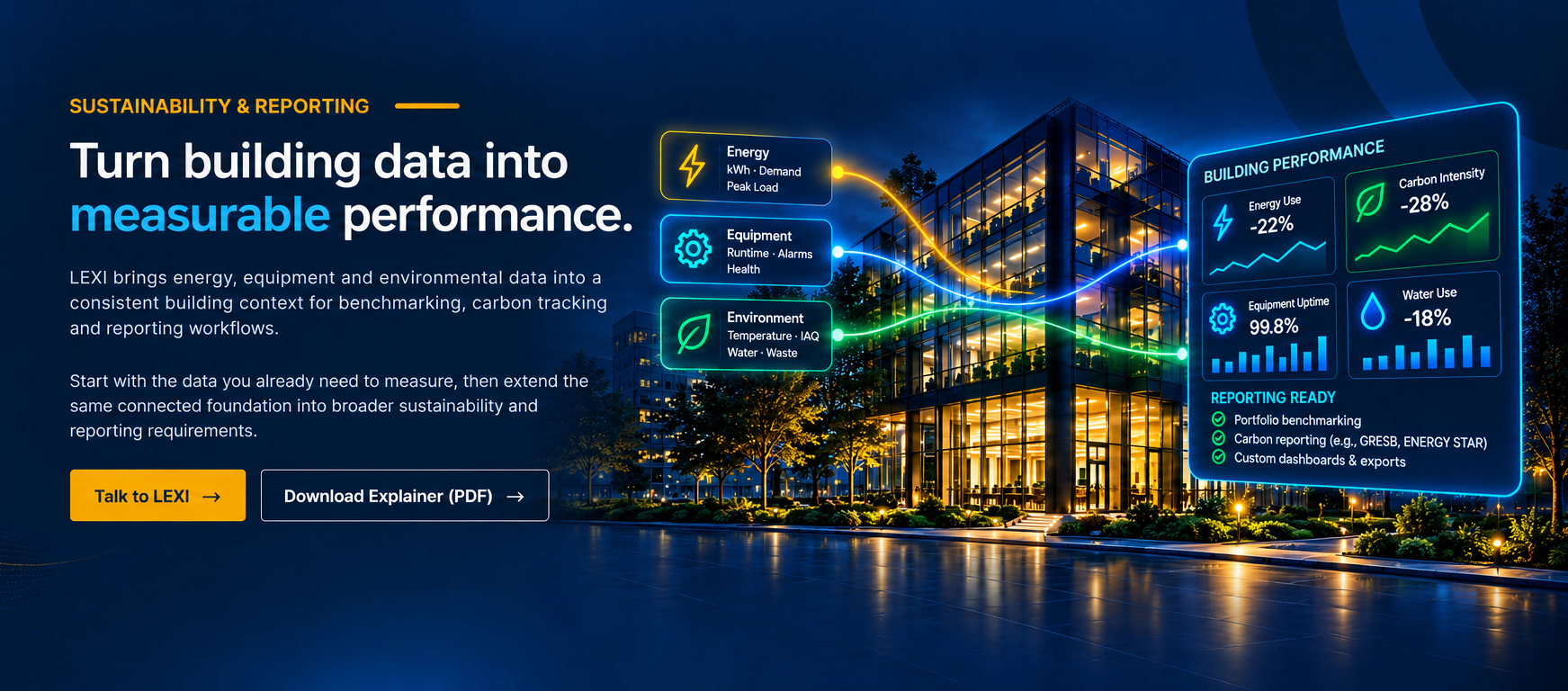
Sustainability & reporting — turn building data into measurable performance. LEXI brings energy, equipment and environmental data into a consistent building context for benchmarking, carbon tracking and reporting workflows. Start with the data you already need to measure, then extend the same connected foundation into broader sustainability and reporting requirements. Energy, equipment and environmental data flow into a building-performance view — energy use down 22%, carbon intensity down 28%, equipment uptime 99.8%, water use down 18% — that is reporting ready for portfolio benchmarking, carbon reporting (such as GRESB and ENERGY STAR) and custom dashboards and exports.
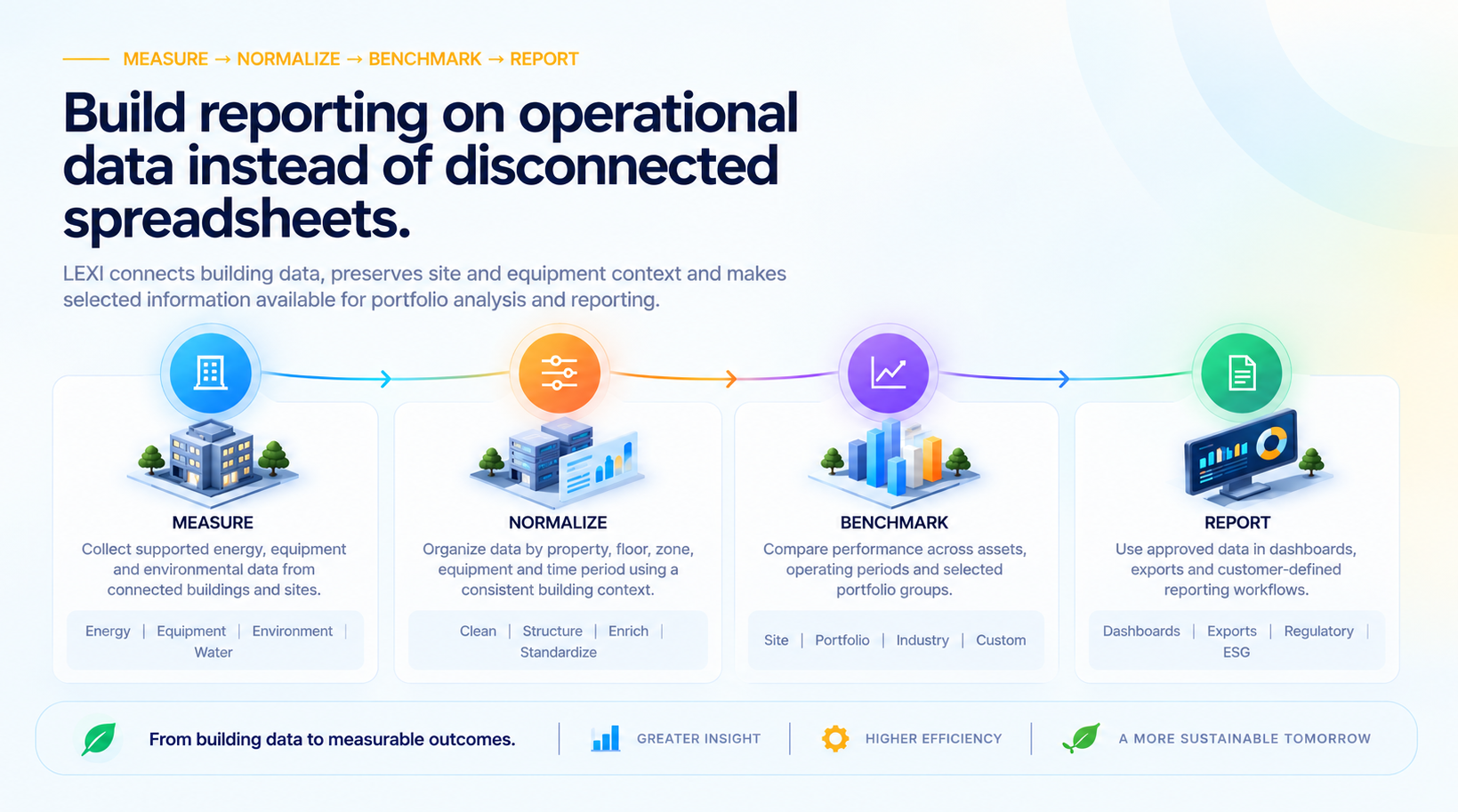
Measure, normalize, benchmark, report — build reporting on operational data instead of disconnected spreadsheets. LEXI connects building data, preserves site and equipment context and makes selected information available for portfolio analysis and reporting. Measure: collect supported energy, equipment and environmental data from connected buildings and sites. Normalize: organize data by property, floor, zone, equipment and time period using a consistent building context. Benchmark: compare performance across assets, operating periods and selected portfolio groups. Report: use approved data in dashboards, exports and customer-defined reporting workflows. From building data to measurable outcomes: greater insight, higher efficiency and a more sustainable tomorrow.
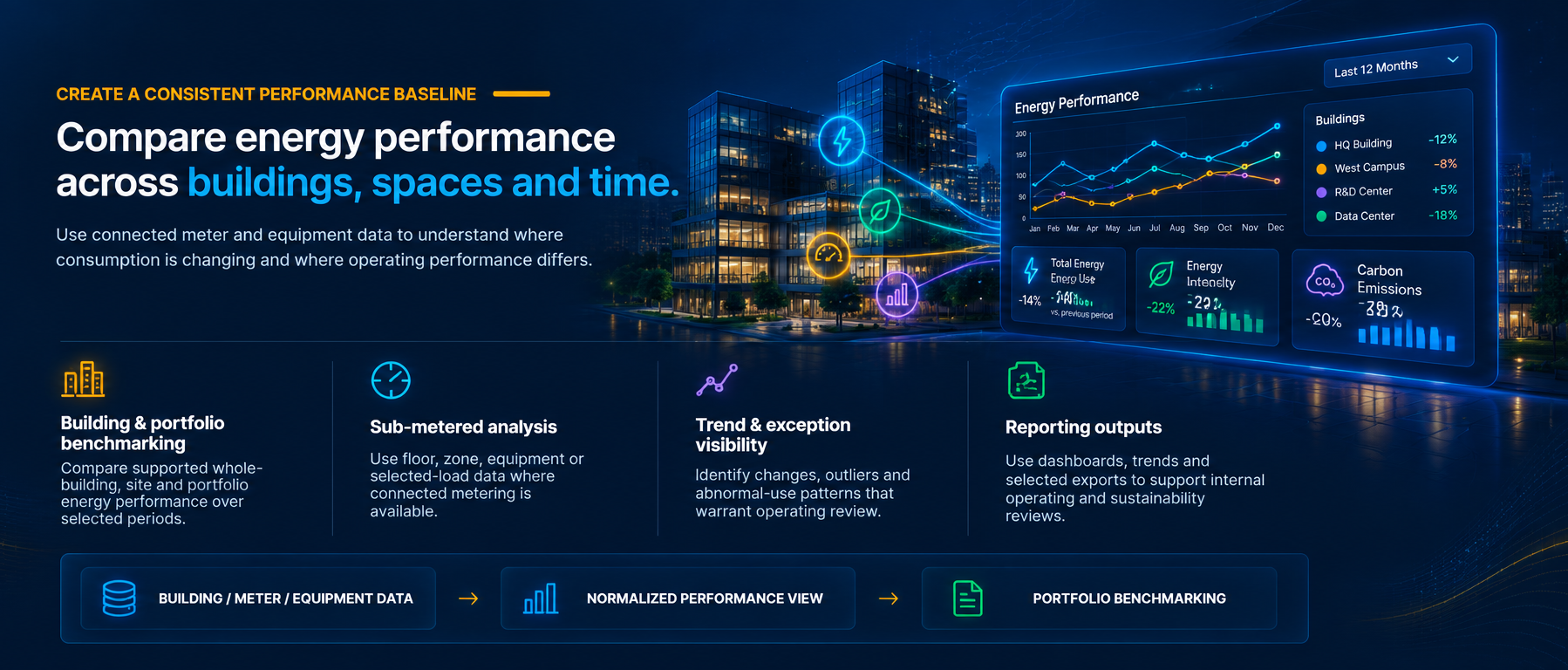
Create a consistent performance baseline — compare energy performance across buildings, spaces and time. Use connected meter and equipment data to understand where consumption is changing and where operating performance differs. Building & portfolio benchmarking: compare supported whole-building, site and portfolio energy performance over selected periods. Sub-metered analysis: use floor, zone, equipment or selected-load data where connected metering is available. Trend & exception visibility: identify changes, outliers and abnormal-use patterns that warrant operating review. Reporting outputs: use dashboards, trends and selected exports to support internal operating and sustainability reviews. Flow: building, meter and equipment data to normalized performance view to portfolio benchmarking.
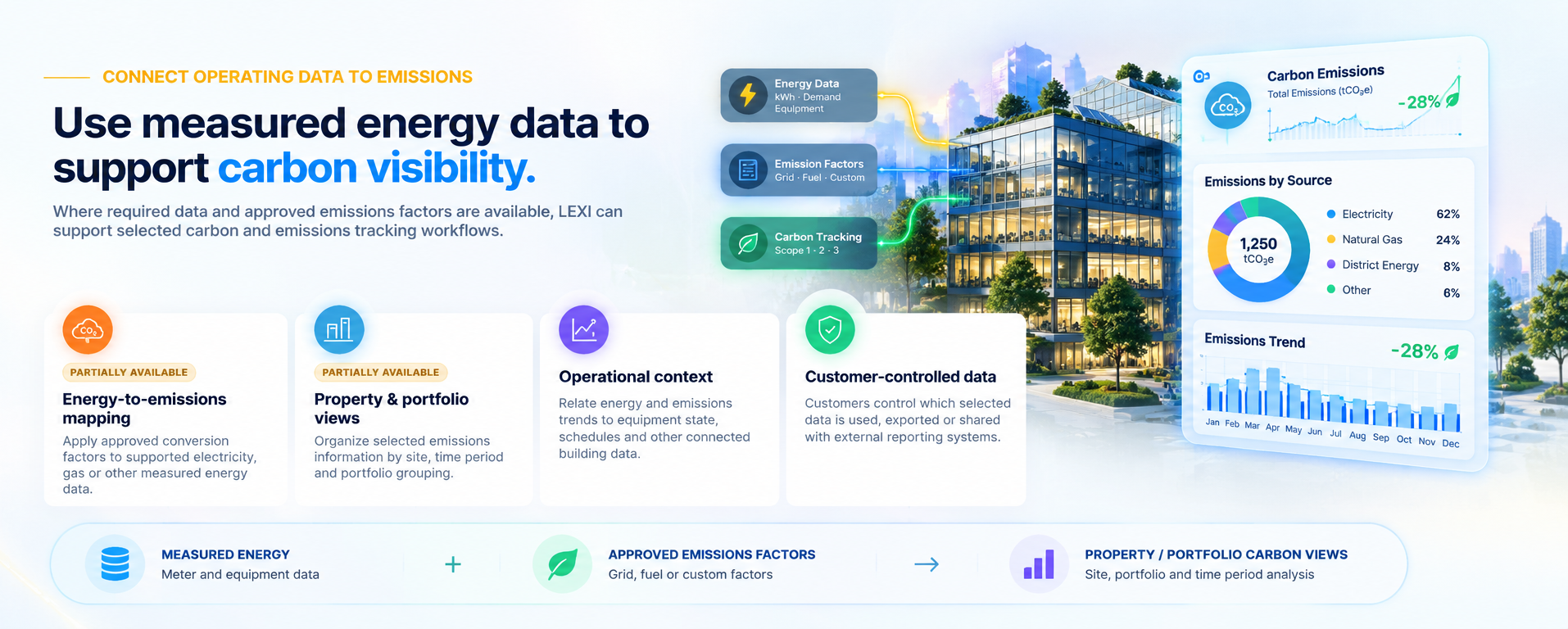
Connect operating data to emissions — use measured energy data to support carbon visibility. Where required data and approved emissions factors are available, LEXI can support selected carbon and emissions tracking workflows. Energy-to-emissions mapping (partially available): apply approved conversion factors to supported electricity, gas or other measured energy data. Property & portfolio views (partially available): organize selected emissions information by site, time period and portfolio grouping. Operational context: relate energy and emissions trends to equipment state, schedules and other connected building data. Customer-controlled data: customers control which selected data is used, exported or shared with external reporting systems. Flow: measured energy plus approved emissions factors to property and portfolio carbon views.
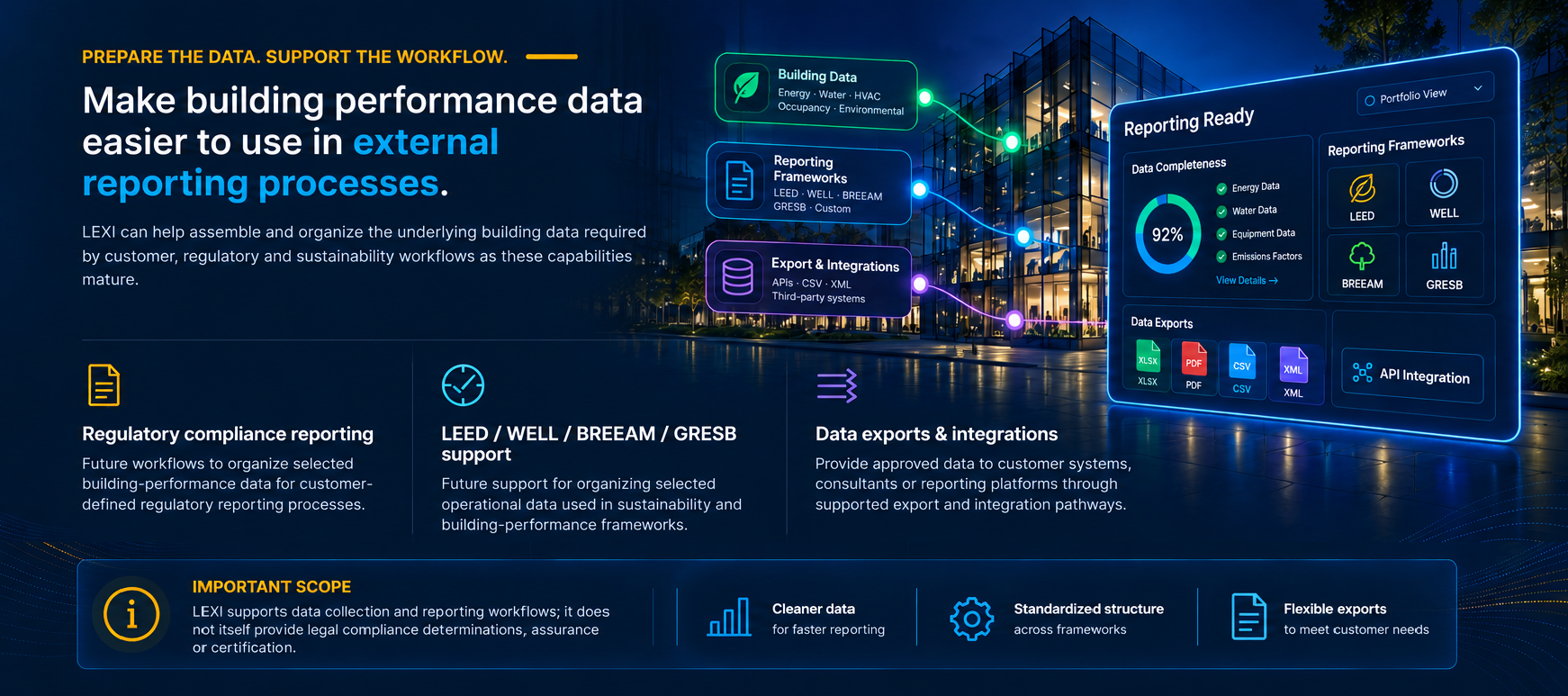
Prepare the data, support the workflow — make building performance data easier to use in external reporting processes. LEXI can help assemble and organize the underlying building data required by customer, regulatory and sustainability workflows as these capabilities mature. Regulatory compliance reporting (roadmap): future workflows to organize selected building-performance data for customer-defined regulatory reporting processes. LEED / WELL / BREEAM / GRESB support (roadmap): future support for organizing selected operational data used in sustainability and building-performance frameworks. Data exports & integrations: provide approved data to customer systems, consultants or reporting platforms through supported export and integration pathways. Important scope: LEXI supports data collection and reporting workflows; it does not itself provide legal compliance determinations, assurance or certification.
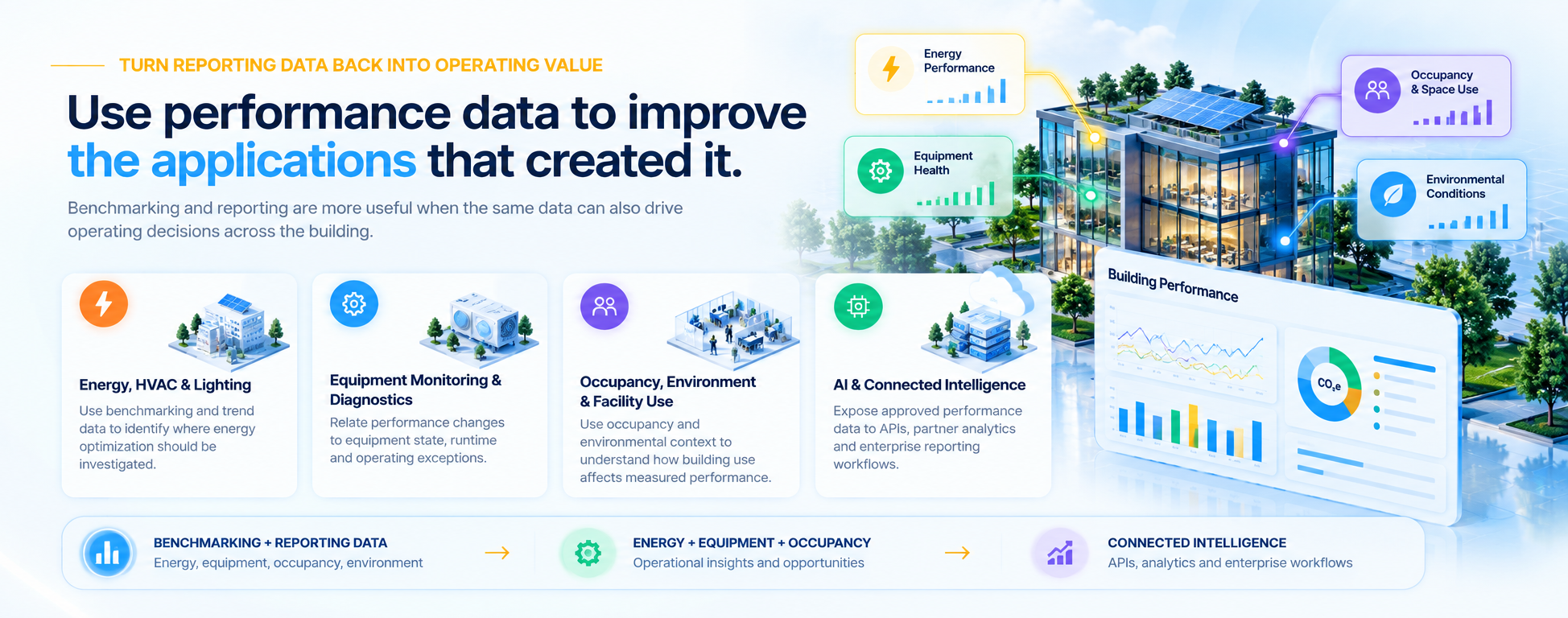
Turn reporting data back into operating value — use performance data to improve the applications that created it. Benchmarking and reporting are more useful when the same data can also drive operating decisions across the building. Energy, HVAC & Lighting: use benchmarking and trend data to identify where energy optimization should be investigated. Equipment Monitoring & Diagnostics: relate performance changes to equipment state, runtime and operating exceptions. Occupancy, Environment & Facility Use: use occupancy and environmental context to understand how building use affects measured performance. AI & Connected Intelligence: expose approved performance data to APIs, partner analytics and enterprise reporting workflows.
Start with one, expand over time — build the data foundation once, then reuse it across reporting needs. Start with energy benchmarking or portfolio reporting, then add compatible carbon and sustainability workflows as the required data and capabilities are available. Energy Benchmarking & Reporting: create consistent energy views across buildings, meters, equipment and time periods. Carbon & Emissions Tracking (partially available): extend measured energy data into selected emissions-tracking workflows where required inputs are available. Compliance & Framework Support (roadmap): prepare for future regulatory and sustainability-framework reporting using the same connected data foundation. What you get: normalized building data, energy benchmarking, portfolio reporting, selected carbon tracking and data exports & integrations. Start with the reporting requirement you already have: build the connected data foundation first, then extend it into broader portfolio, carbon and sustainability workflows.
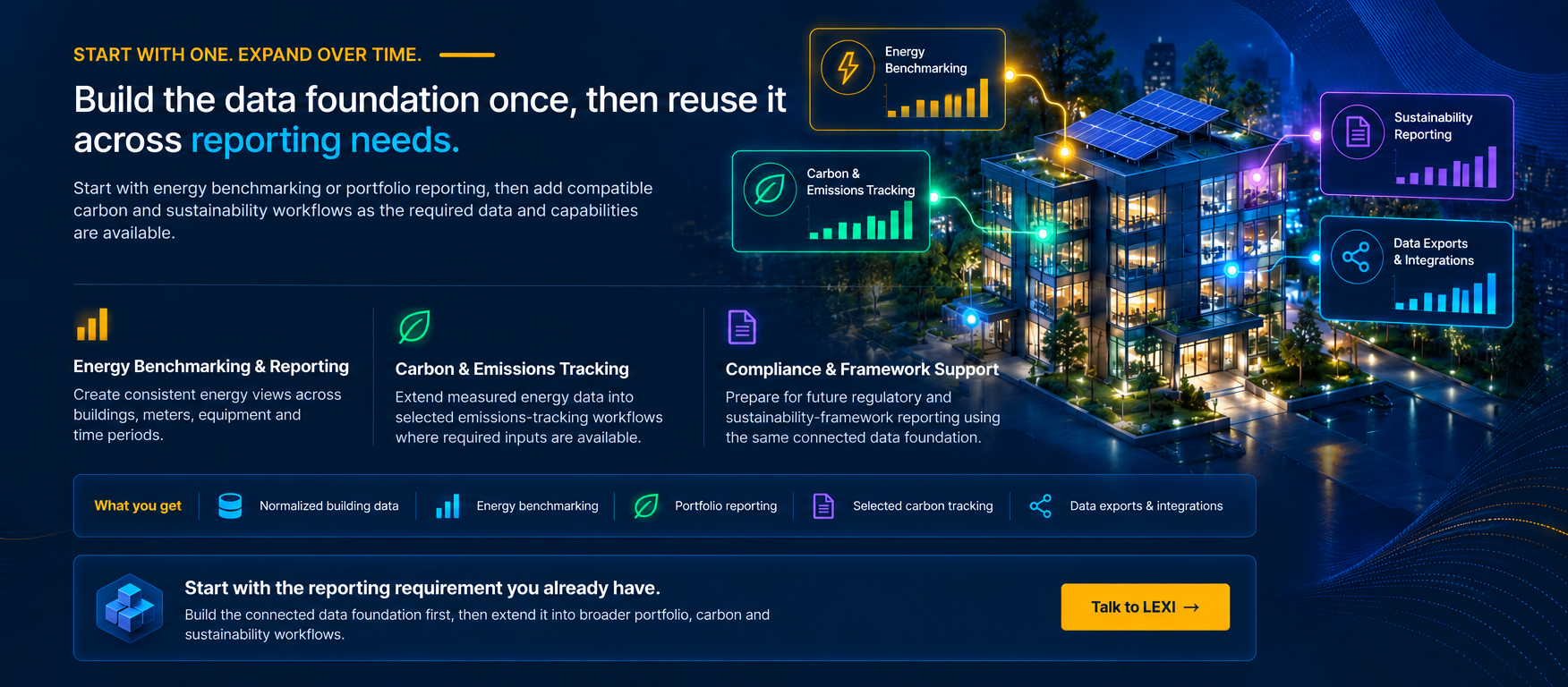
What you getNormalized building data | Energy benchmarking | Portfolio reporting | Selected carbon tracking | Data exports & integrations
Start with the reporting requirement you already have.
Build the connected data foundation first, then extend it into broader portfolio, carbon and sustainability workflows.